
 PhD Experts
Black holes are among the most fascinating and mysterious objects in the universe. They challenge our understanding of physics, stretch our imagination, and blur the boundary between science and philosophy. For decades, scientists and science-fiction writers alike have asked the same haunting question: what is inside a black hole?
The short answer is that no one knows for certain. The longer answer is far more interesting. Using modern physics especially Einstein’s theory of general relativity and insights from quantum mechanics we can build a picture of what might lie inside, even if direct observation is impossible. This blog explores what scientists think is inside a black hole, what happens when you fall into one, and why these objects remain one of the greatest unsolved puzzles in science.
Understanding What a Black Hole Is
A black hole is not a cosmic vacuum cleaner sucking everything in. Instead, it is a region of space where gravity is so intense that nothing not even light can escape once it crosses a certain boundary.
Black holes form when massive stars collapse under their own gravity at the end of their lives. When the inward pull of gravity overwhelms all other forces, the star compresses into an incredibly dense state, warping space and time around it.
From the outside, black holes are surprisingly simple. They can be described by just three properties: mass, electric charge, and spin. Everything else about the original star its composition, structure, and history seems to vanish behind the black hole’s boundary.
The Event Horizon: The Point of No Return
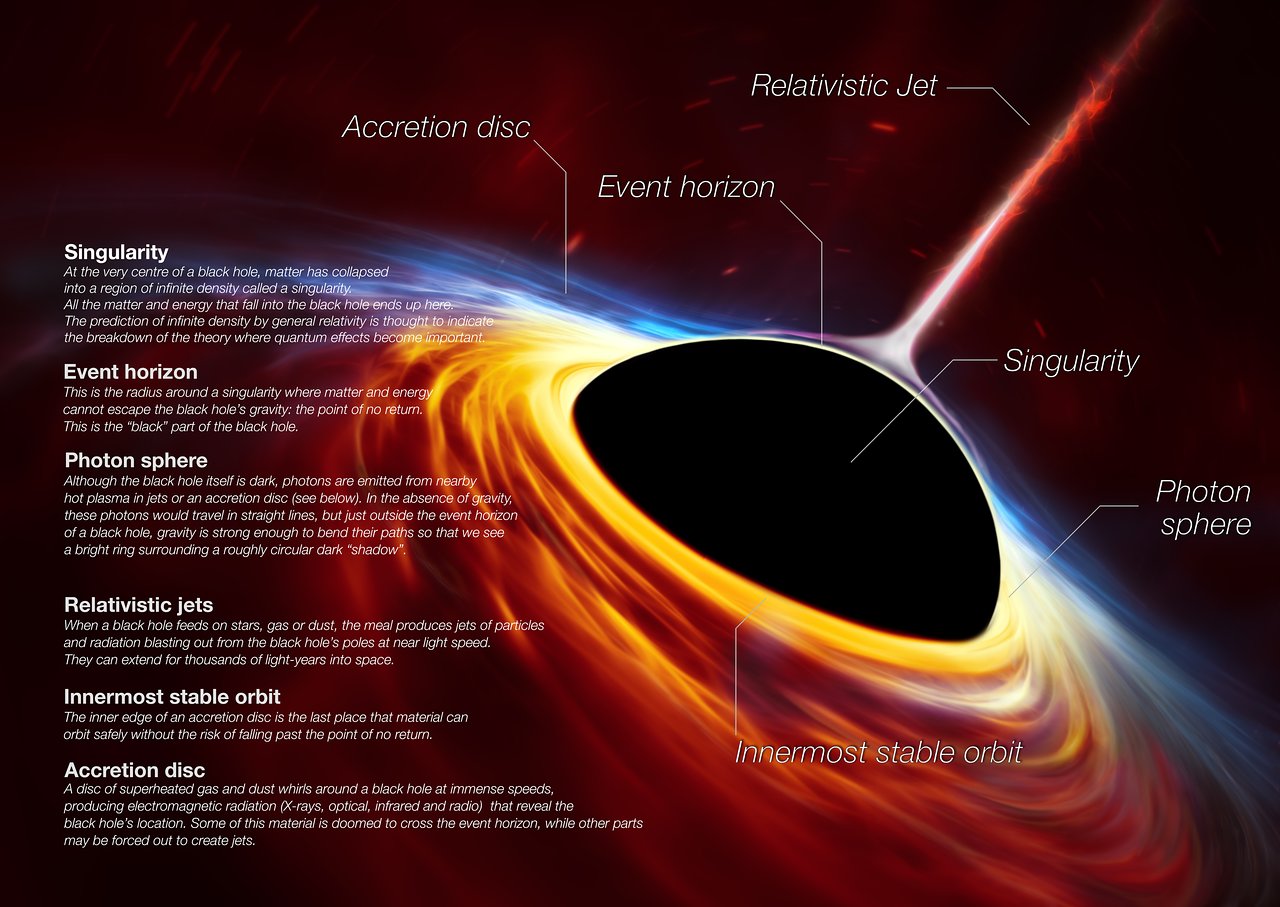
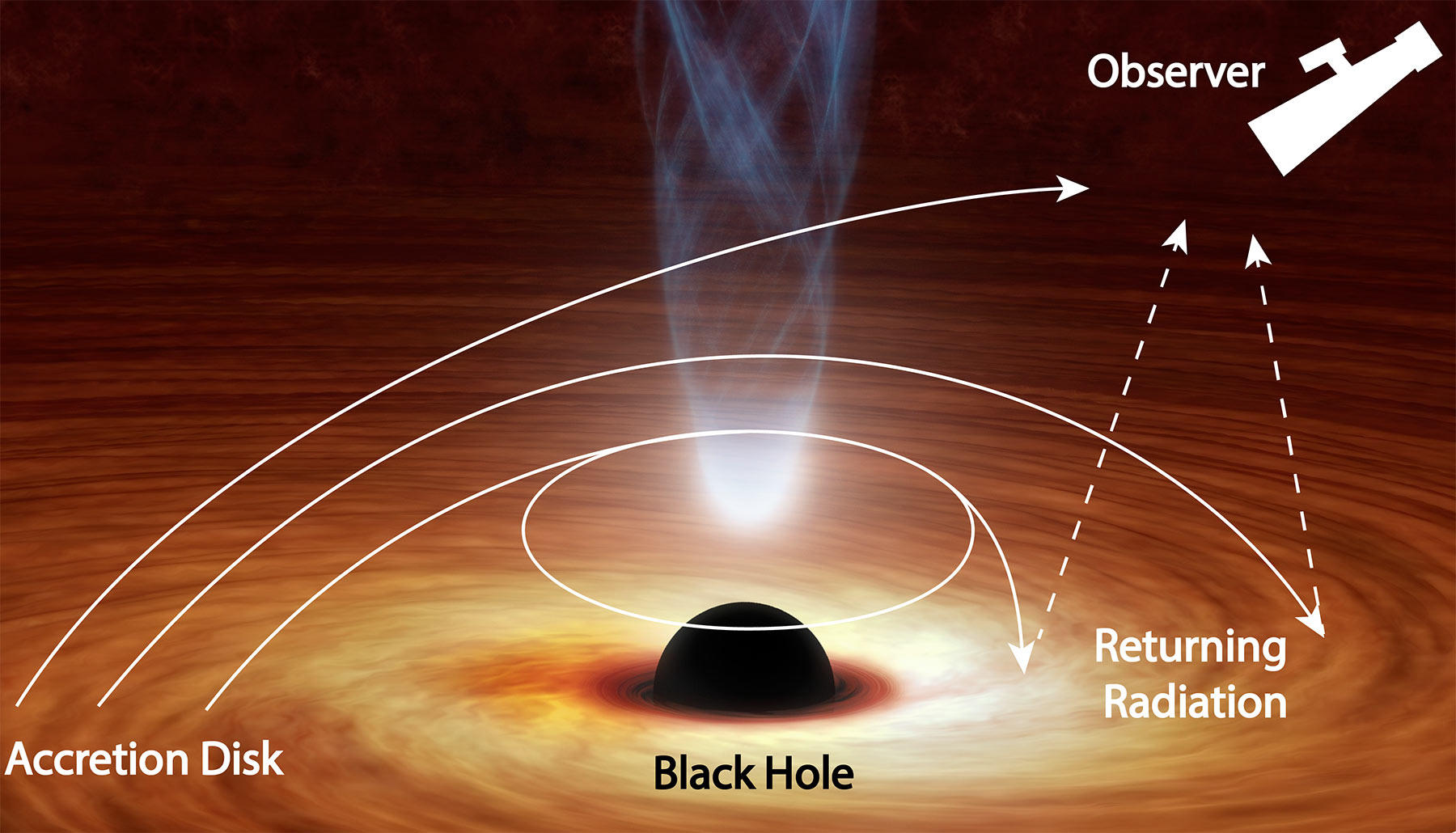
The outer “surface” of a black hole is called the event horizon. It is not a physical wall but a boundary in spacetime. Once anything crosses this boundary, it can never return to the outside universe.
To an outside observer, time appears to slow down for an object approaching the event horizon. Light emitted from the falling object becomes increasingly redshifted and dim, making it seem to freeze at the edge forever. However, from the perspective of the falling object, nothing special happens at the event horizon at least for very large black holes. You would pass through it without noticing a sudden change.
The event horizon hides whatever lies inside, making direct observation impossible. This is why the interior of a black hole remains one of the greatest mysteries in physics.
Inside the Event Horizon: A One-Way Journey
Once inside the event horizon, the rules of the universe change dramatically. In normal space, you can choose to move in different directions. Inside a black hole, moving toward the center is as inevitable as moving forward in time.
According to general relativity, all possible paths inside the event horizon lead toward the black hole’s core. No force, no rocket engine, and no known physical process can stop this inward journey.
This strange behavior comes from how spacetime itself is warped. Inside the black hole, space and time effectively swap roles. Just as you cannot stop time from moving forward, you cannot stop yourself from moving deeper into the black hole.
The Singularity: The Heart of the Mystery
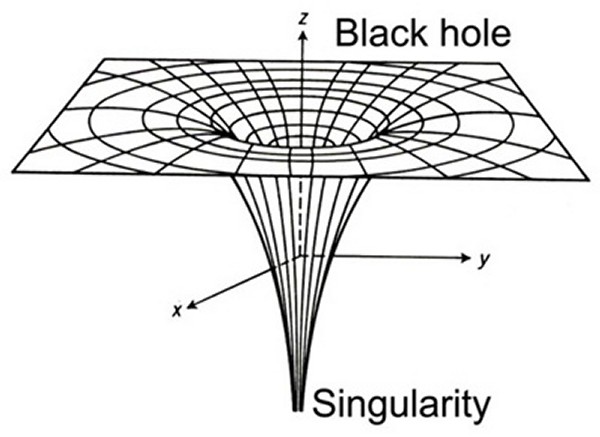
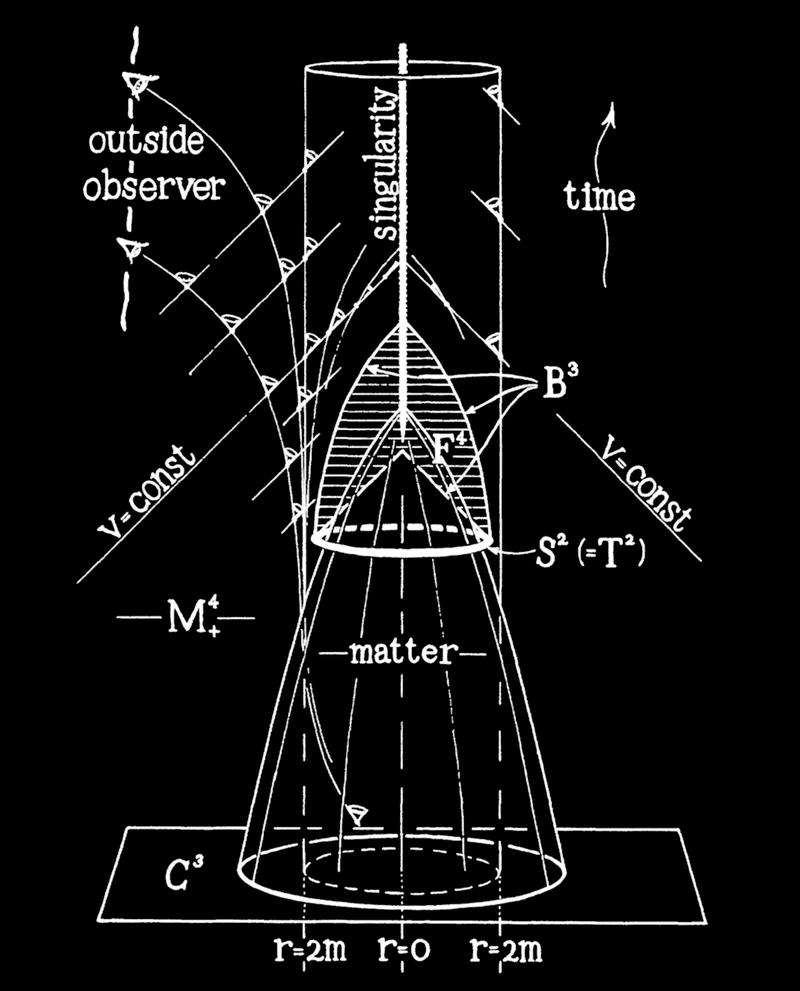
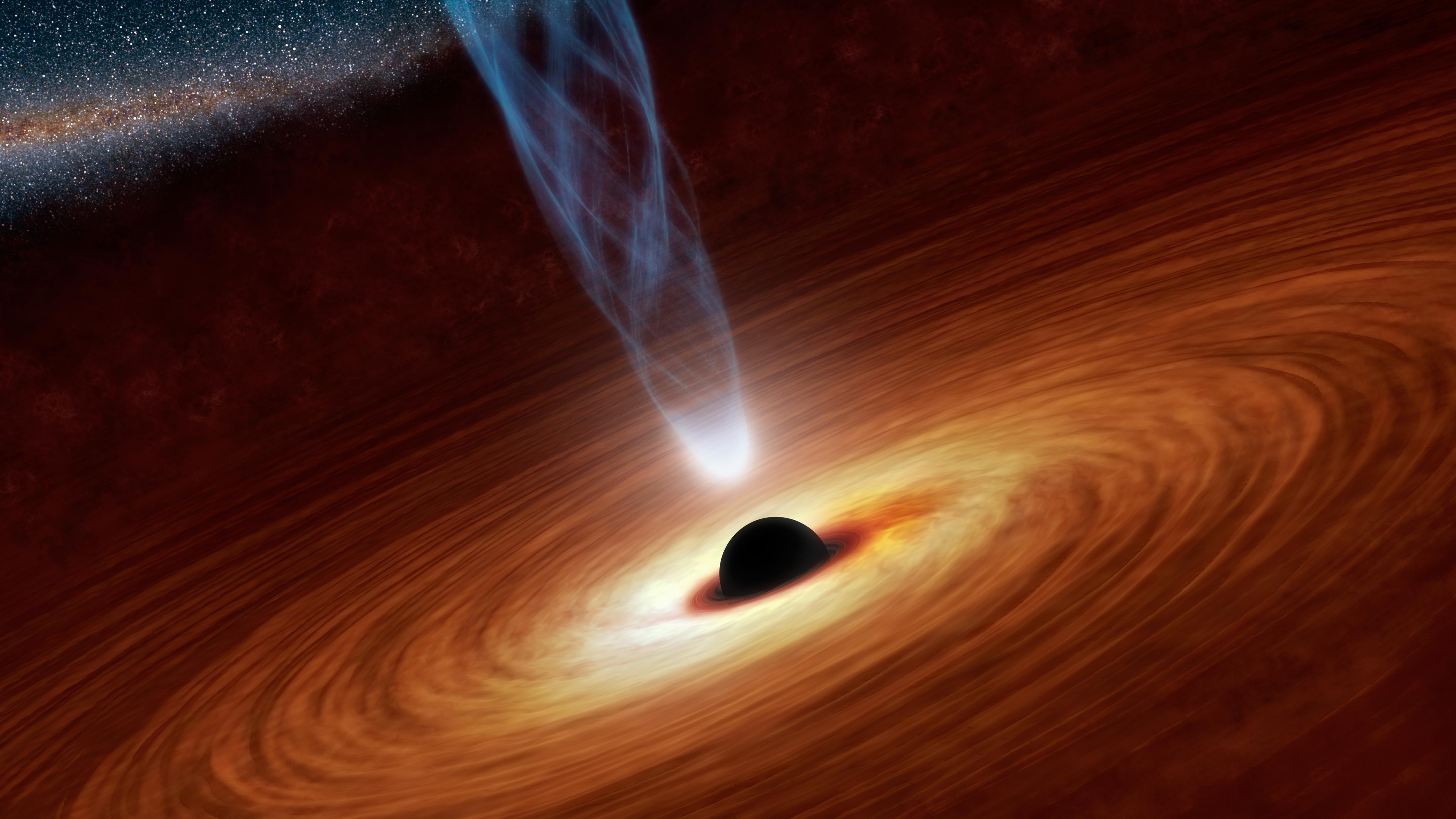
At the center of a black hole, general relativity predicts the existence of a singularity. This is a point (or possibly a ring, in rotating black holes) where density becomes infinite and spacetime curvature becomes infinite as well.
At the singularity:
-
Matter is compressed into an unimaginably small volume
-
Known laws of physics break down
-
Space and time, as we understand them, cease to exist
The singularity is not just mysterious it is a sign that our current theories are incomplete. Infinite values in physics usually indicate that a theory has reached its limit.
Many physicists believe that a future theory of quantum gravity, which would unify general relativity and quantum mechanics, will replace the idea of an infinite singularity with something more physically meaningful.
What Happens If You Fall Into a Black Hole?
The experience of falling into a black hole depends on its size.
Small Black Holes: Spaghettification
In smaller black holes, tidal forces near the event horizon are extremely strong. These forces stretch objects vertically and compress them horizontally in a process known as spaghettification.
Feet-first, you would feel your body being stretched as gravity pulls more strongly on your feet than your head. Eventually, atoms themselves would be torn apart.
Supermassive Black Holes: A Calm Crossing
In contrast, supermassive black holes like those found at the centers of galaxies have much gentler tidal forces at the event horizon. You could cross the event horizon without immediate harm, unaware that you had passed the point of no return.
However, survival would be temporary. As you fall deeper, tidal forces grow stronger, and destruction becomes inevitable before reaching the singularity.
Do Black Holes Destroy Information?
One of the biggest debates about black holes involves information. According to quantum mechanics, information can never be destroyed. But black holes seem to erase all information about what falls into them.
This conflict is known as the black hole information paradox.
Physicist Stephen Hawking showed that black holes are not completely black. They emit tiny amounts of radiation, now called Hawking radiation, due to quantum effects near the event horizon. Over incredibly long timescales, a black hole can slowly evaporate.
The paradox arises because Hawking radiation appears to carry no information about what fell into the black hole. If the black hole eventually disappears, where does the information go?
Possible solutions include:
-
Information is encoded on the event horizon
-
Information escapes subtly through Hawking radiation
-
Information is preserved in a hidden quantum structure
So far, no single explanation has been universally accepted.
Are Wormholes or Other Universes Inside?
Some speculative theories suggest that black holes could be gateways to other regions of spacetime.
One idea involves wormholes hypothetical tunnels connecting distant points in the universe or even different universes. In certain mathematical solutions to Einstein’s equations, black holes are linked to white holes through wormholes.
Another hypothesis suggests that the interior of a black hole could contain a new expanding universe, sometimes called a “baby universe.” In this view, the Big Bang itself might have originated from a black hole in another universe.
While fascinating, these ideas remain speculative and currently lack experimental evidence.
What Do We Actually Know for Sure?
Despite the mystery, scientists are confident about some aspects of black holes:
-
Event horizons exist and have been indirectly observed
-
Black holes warp spacetime exactly as predicted by general relativity
-
Matter falling into black holes heats up and emits radiation before crossing the event horizon
-
Black holes can merge, producing gravitational waves detected on Earth
What lies beyond the event horizon, however, remains hidden.
Why Black Holes Matter
Understanding what is inside a black hole is not just an abstract question. It sits at the intersection of gravity, quantum mechanics, and the nature of reality itself.
Black holes act as cosmic laboratories where the universe pushes physics to its limits. Solving their mysteries could lead to:
-
A unified theory of physics
-
Deeper insights into the nature of space and time
-
A better understanding of the origin and fate of the universe
Conclusion: A Doorway to the Unknown
So, what is inside a black hole?
According to our best theories, there is an event horizon that marks the point of no return, an interior where spacetime behaves in alien ways, and a central singularity where our current understanding of physics breaks down. Beyond that, we can only speculate.
Black holes remind us that the universe is far stranger than everyday experience suggests. They are not just objects in space they are boundaries of knowledge, challenging us to look deeper, think harder, and expand our understanding of reality itself.
As science advances, the answer to what lies inside a black hole may one day move from mystery to understanding. Until then, black holes remain one of the most profound and captivating enigmas of the cosmos.