 PhD Experts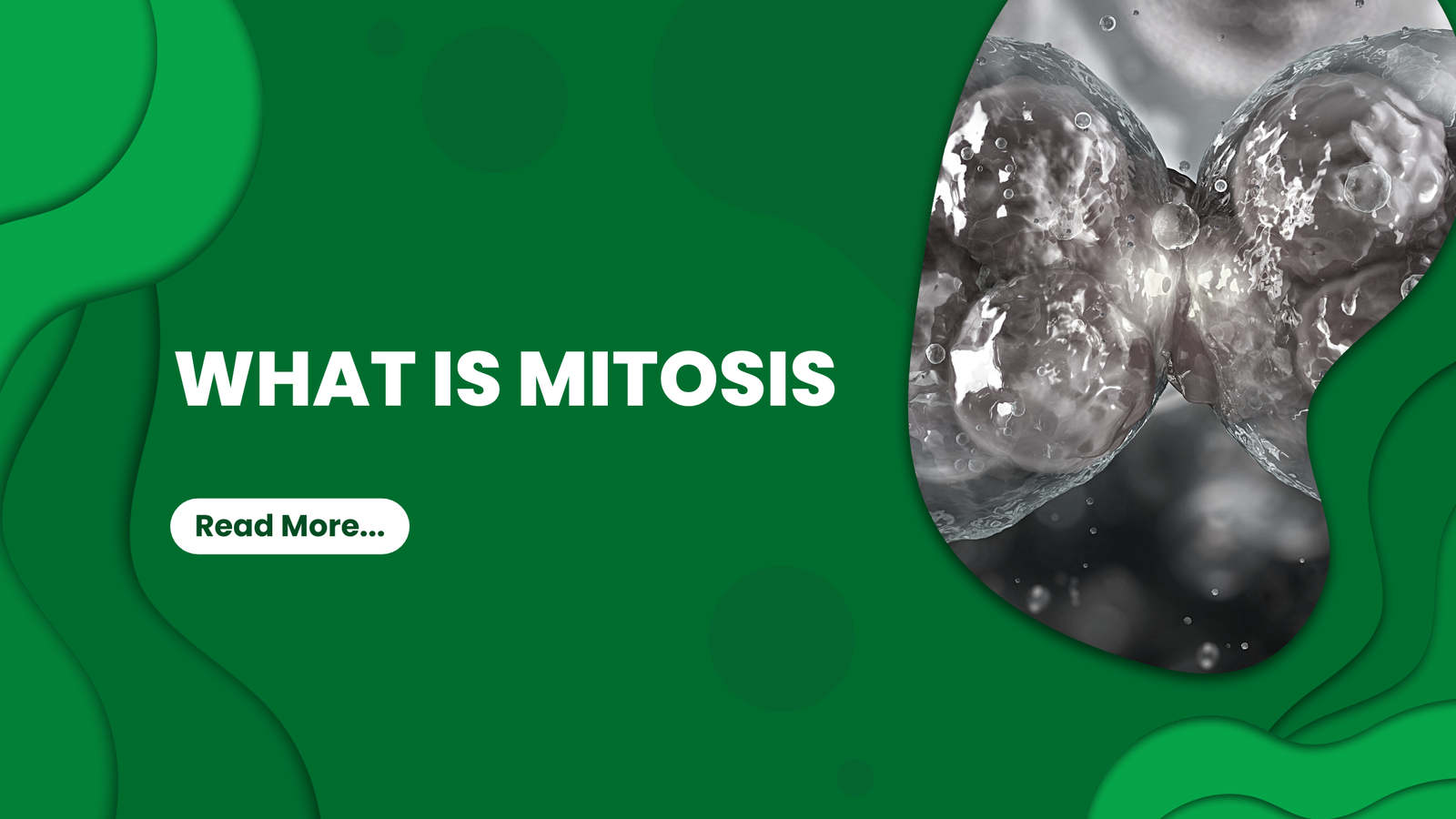
Mitosis is one of the most fundamental biological processes that make life possible. From the growth of a tiny embryo into a fully developed human being to the healing of a small cut on your skin, mitosis plays a vital role in maintaining life. But what exactly is mitosis, and why is it so important?
In this blog, we will explore what mitosis is, its stages, importance, differences from meiosis, and real-life examples, all explained in a simple and easy-to-understand way.
What Is Mitosis?
Mitosis is a type of cell division in which a single parent cell divides to produce two genetically identical daughter cells. Each daughter cell has the same number of chromosomes as the original cell.
Mitosis occurs in somatic cells (body cells) and is responsible for growth, tissue repair, and cell replacement in multicellular organisms. Unlike meiosis, mitosis does not produce reproductive cells.
In humans, mitosis ensures that each new cell contains 46 chromosomes, exactly the same as the parent cell.
Discovery of Mitosis
The process of mitosis was first observed in the late 19th century by a German biologist named Walther Flemming. Using advanced staining techniques, he studied cell division and described the stages of mitosis in detail. His work laid the foundation for modern cell biology.
Why Is Mitosis Important?
Mitosis is essential for several biological functions:
1. Growth
As organisms grow, they need more cells. Mitosis increases the number of cells, allowing the body to develop from a single fertilized egg into a complex organism.
2. Repair and Healing
When tissues are damaged due to injury, mitosis helps replace dead or damaged cells, enabling healing and regeneration.
3. Cell Replacement
Old and worn-out cells, such as skin cells and blood cells, are continuously replaced by new cells formed through mitosis.
4. Asexual Reproduction
In unicellular organisms like amoeba and yeast, mitosis allows asexual reproduction, producing identical offspring.
The Cell Cycle and Mitosis
Mitosis is just one part of the cell cycle, which consists of two main phases:
-
Interphase
-
Mitotic Phase (M Phase)
Interphase
Interphase is the longest phase of the cell cycle and includes:
-
G1 Phase – Cell growth
-
S Phase – DNA replication
-
G2 Phase – Preparation for division
Although mitosis does not occur during interphase, this stage is crucial because the DNA is duplicated here.
Stages of Mitosis
Mitosis is divided into five distinct stages:
-
Prophase
-
Metaphase
-
Anaphase
-
Telophase
-
Cytokinesis
These stages ensure accurate division of genetic material.
1. Prophase
Prophase is the first stage of mitosis.
Key Events:
-
Chromatin condenses into visible chromosomes
-
Each chromosome consists of two sister chromatids
-
Nuclear membrane begins to break down
-
Spindle fibers start forming from centrosomes
This stage prepares the cell for chromosome alignment.
2. Metaphase
Metaphase is the stage where chromosomes line up at the center of the cell.
Key Events:
-
Chromosomes align along the metaphase plate (equator)
-
Spindle fibers attach to centromeres
-
Proper attachment ensures equal division
Metaphase is critical because errors here can lead to genetic disorders.
3. Anaphase
Anaphase is when the actual separation occurs.
Key Events:
-
Sister chromatids separate
-
Chromatids are pulled toward opposite poles
-
Each chromatid becomes an individual chromosome
This ensures both daughter cells receive identical genetic material.
4. Telophase
Telophase marks the end of mitosis.
Key Events:
-
Chromosomes reach opposite poles
-
Chromosomes begin to decondense
-
Nuclear membranes reform
-
Spindle fibers disappear
At this stage, the cell has two complete nuclei.
5. Cytokinesis
Cytokinesis is the final step, although technically separate from mitosis.
Key Events:
-
Cytoplasm divides
-
Two independent daughter cells form
In animal cells, cytokinesis occurs through a cleavage furrow, while in plant cells, a cell plate forms.
Diagram of Mitosis (Conceptual)
The sequence of mitosis is often remembered using the mnemonic:
P – M – A – T
(Prophase, Metaphase, Anaphase, Telophase)
Cytokinesis follows telophase.
Mitosis vs Meiosis
Many students confuse mitosis with meiosis. Here’s a simple comparison:
| Feature | Mitosis | Meiosis |
|---|---|---|
| Type of cells | Body cells | Reproductive cells |
| Number of divisions | One | Two |
| Daughter cells | Two | Four |
| Genetic makeup | Identical | Different |
| Chromosome number | Same as parent | Half of parent |
Errors in Mitosis
Sometimes, mistakes occur during mitosis, leading to:
1. Cancer
Uncontrolled mitotic division can result in tumor formation.
2. Genetic Disorders
Improper chromosome separation may cause conditions like aneuploidy.
Cells have checkpoints during the cell cycle to prevent such errors.
Role of Mitosis in Cancer Research
Cancer is essentially a disease of uncontrolled mitosis. Understanding mitosis helps scientists:
-
Develop anti-cancer drugs
-
Target rapidly dividing cells
-
Improve radiation therapy
Many cancer treatments aim to disrupt mitosis in cancer cells.
Mitosis in Plants
Mitosis in plant cells is similar to animal cells but with differences:
-
Presence of a cell wall
-
Formation of a cell plate during cytokinesis
-
No centrioles in most plant cells
Despite these differences, the stages remain the same.
Real-Life Examples of Mitosis
-
Healing of wounds
-
Growth of hair and nails
-
Replacement of red blood cells
-
Regeneration in plants
These everyday processes highlight the importance of mitosis in life.
Interesting Facts About Mitosis
-
Human skin cells divide approximately every 24 hours
-
One cell division can take 1–2 hours
-
Trillions of mitotic divisions occur in the human body daily
-
Errors in mitosis increase with age
Conclusion
Mitosis is a vital biological process responsible for growth, repair, and maintenance of living organisms. By producing two genetically identical daughter cells, mitosis ensures genetic stability across generations of cells. From healing wounds to replacing worn-out cells, mitosis works silently yet efficiently throughout our lives.
Understanding mitosis not only helps students excel academically but also provides insight into crucial medical fields like cancer research and regenerative medicine. In short, mitosis is the foundation of growth and continuity in living organisms.